The Attacker Is Building a Map. Make It Wrong.
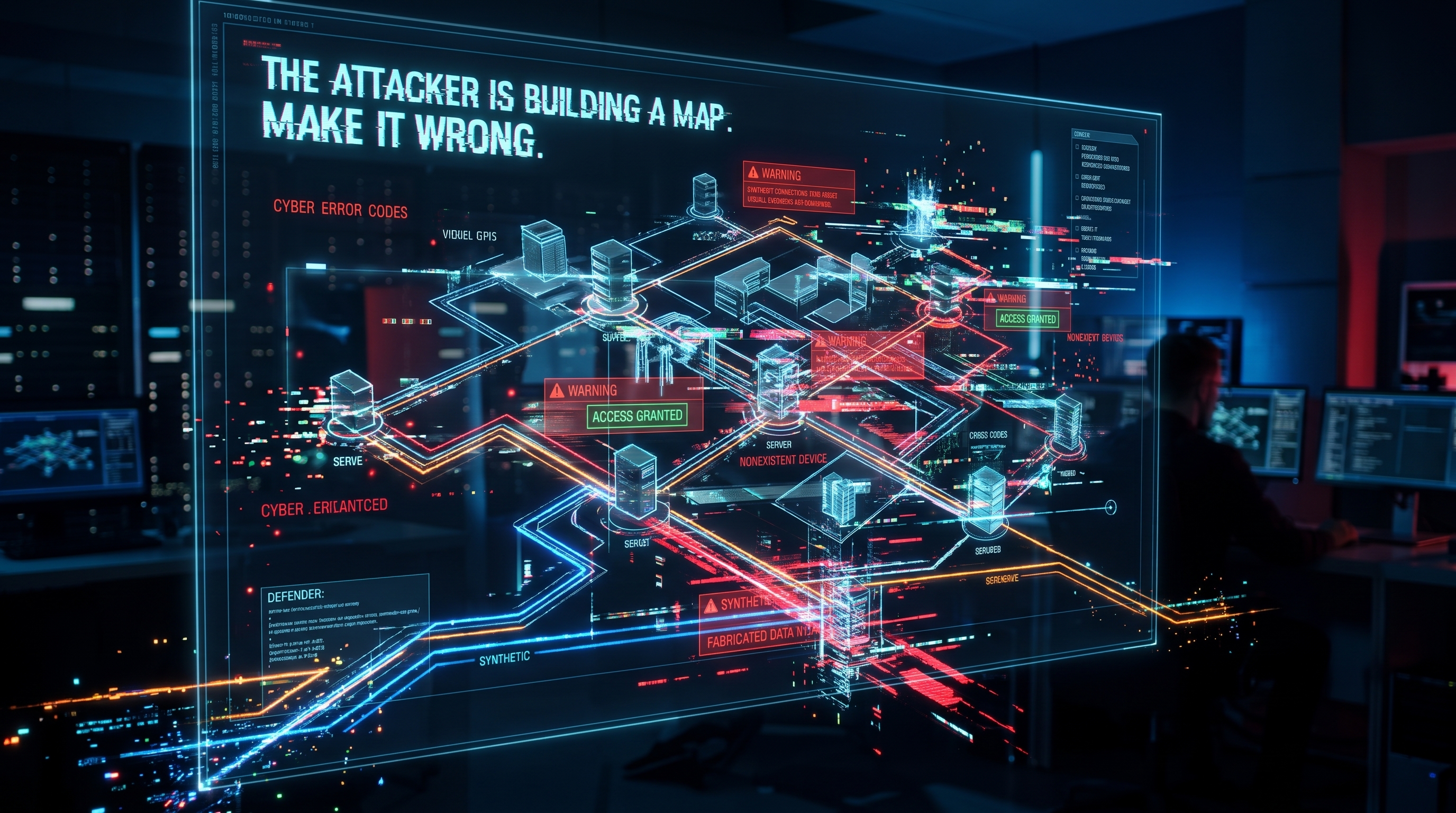
New research from Beazley Security offers a fascinating glimpse into how autonomous cyber attackers operate.
Investigators recovered the AI agents' own memory files. The agents maintained a shared repository of knowledge about the environment they were attacking: its infrastructure, vulnerabilities and compromised credentials.
They were building a map of the terrain, sharing what they learned and using that knowledge to inform subsequent attacks.
This should prompt a fundamentally different conversation about cybersecurity.
What if the defender deliberately corrupted the map?
Imagine an attacker playing a game of Twenty Questions with your network.
Is there a device at this address? Is there a service available here? Can I establish a connection?
The network ordinarily provides useful answers. Over time, the attacker develops an increasingly accurate understanding of the environment and its opportunities.
AI makes this process extraordinarily fast and inexpensive.
Meanwhile, the cybersecurity industry is investing enormous sums in understanding the attacker: collecting more data, analyzing more behavior and identifying malicious intent.
But why are we allowing the attacker to acquire useful intelligence about our environment so cheaply?
What if we answered yes to every inquiry about an unoccupied network address?
Suddenly, the attacker encounters apparent devices and services that don't exist. Its understanding of the environment becomes unreliable.
Every synthetic connection introduces friction into the attack process. And every contact with a nonexistent device provides a deterministic event that can trigger automatic isolation of the source.
No threat classification. No investigation required before enforcement. No need to understand the attacker's intentions.
This is what we have built at Ridgeback.
We don't populate the network with individually deployed decoys. We make unassigned address space responsive, turning otherwise empty network terrain into a pervasive defensive capability.
The distinction is strategic:
• Rather than observing reconnaissance, we interdict it.
• Rather than learning from the attacker's activity, we interfere with the attacker's learning.
• Rather than continually increasing the defender's expenditure, we impose costs on the attacker.
And we do it without requiring an AI system of our own to outthink the attacker's AI.
As artificial intelligence makes offensive capabilities increasingly sophisticated, perhaps the defender's greatest opportunity lies in controlling the information upon which that intelligence depends.
Even an extraordinarily intelligent attacker is at a considerable disadvantage when operating from an unreliable map.
Stop spending ever more money trying to understand the attacker. Start making it more expensive for the attacker to understand you.