Cybersecurity Is Facing Its Blitzkrieg Challenge
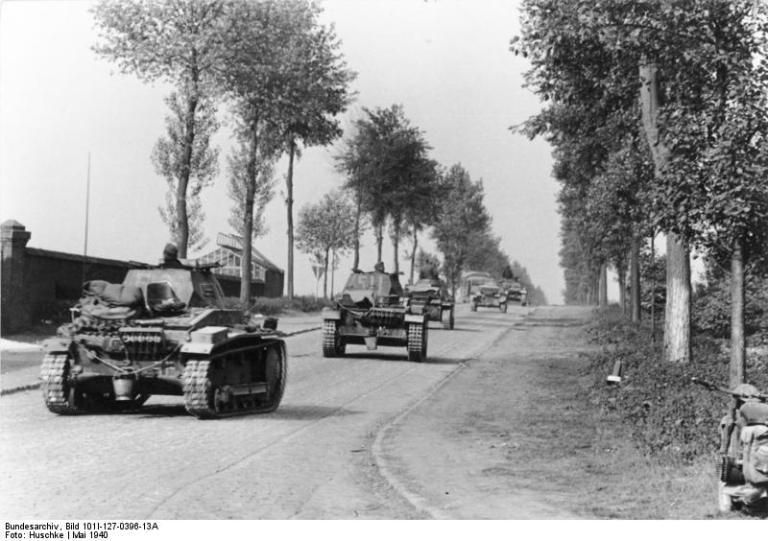
In May 1940, German forces crossed the Ardennes, broke through French defenses at Sedan, and advanced toward the English Channel.
The French possessed formidable weapons, fortifications, and trained forces. But the Germans had changed the tempo of warfare.
By integrating tanks, aircraft, motorized infantry and radio communications, they compressed the interval between finding a weakness, exploiting it, and advancing before the defender could organize.
The breakthrough became an exploitation before the defense could respond.
Agentic AI is bringing a similar change to cybersecurity.
On October 21, Microsoft disclosed a campaign using the agentic framework ARTEX to exploit compromised application trust across customer environments.
The campaign targeted more than 2,250 tenants. At peak, attackers generated approximately 2,900 failed sign-ins per minute. In multiple attacks, they achieved privileged cloud access in less than three hours.
This is not merely faster scripting. It is a shift toward continuous, adaptive machine-driven operations in which reconnaissance, credential abuse, privilege escalation, and exploitation can proceed without human direction at every step.
The attacker no longer needs an operator to evaluate every result before deciding what to execute next.
Yet much of cybersecurity still depends on a sequential process: collect telemetry, identify suspicious behavior, correlate evidence, determine intent, prioritize an alert, and initiate a response.
AI can accelerate that process. But where intervention depends on detection, the defender must still recognize the threat before acting.
The attacker can act without first classifying its own behavior. The defender often cannot.
That is not simply a speed disadvantage. It is an architectural asymmetry.
Even when attacks generate detectable signals, machine-speed exploitation can compress the interval between first indication and accomplished objective beyond the defender's ability to intervene.
Blitzkrieg did not make French artillery, fortifications, or intelligence useless. It exploited a defensive system whose decision and response cycles could not keep pace.
The lesson for cybersecurity is not to abandon detection. It is to stop making detection the prerequisite for every defensive action.
Where authority can be established in advance, unauthorized activity should be denied deterministically by policy, not permitted while an analytic system determines whether it is malicious.
Independent enforcement boundaries become increasingly important as attacks reach machine tempo.
The lesson of Blitzkrieg was not that defenses were useless. It was that defenses organized around the wrong tempo could be defeated even while many of their individual components remained effective.